Hey folks.

Over the last few months, every sense of normalcy has exploded. Trump and his nazi buddies are turning the US into their own little fiefdom and are betraying their allies (including the country I live in, Denmark).

In Europe, there is a push-pull situation with the far-right. It’s still a matter of perspective if the AfD truly lost in an election where it came in second (but with the best post-war results) and don’t get me started with some of the traitors within the EU.

It’s easy to either completely avoid the news or let anxiety take over. But I’ve been finding myself getting angrier and angrier. And if there’s one positive thing about anger, it’s that it won’t let you sit on your ass and do nothing.

My publisher, Inspired Quill, has announced a political resistance anthology, which I am co-editing. It’s our way to do something about this whole fucked-up situation the world is in. What fascists hate more than anything is ideas circulating and people actively standing up against them. They’d rather that you’d despair and sit in your home, refusing to vote or protest because “it doesn’t change anything” and that’s why their first victims are always the arts and means of communication.

I won’t accept that.

Keep an eye on this space or, better still, go and follow Inspired Quill.

And in the words of Camus, yield nothing on the plane of freedom.

And in the words of the Dead Kennedy’s, nazi punks fuck off.

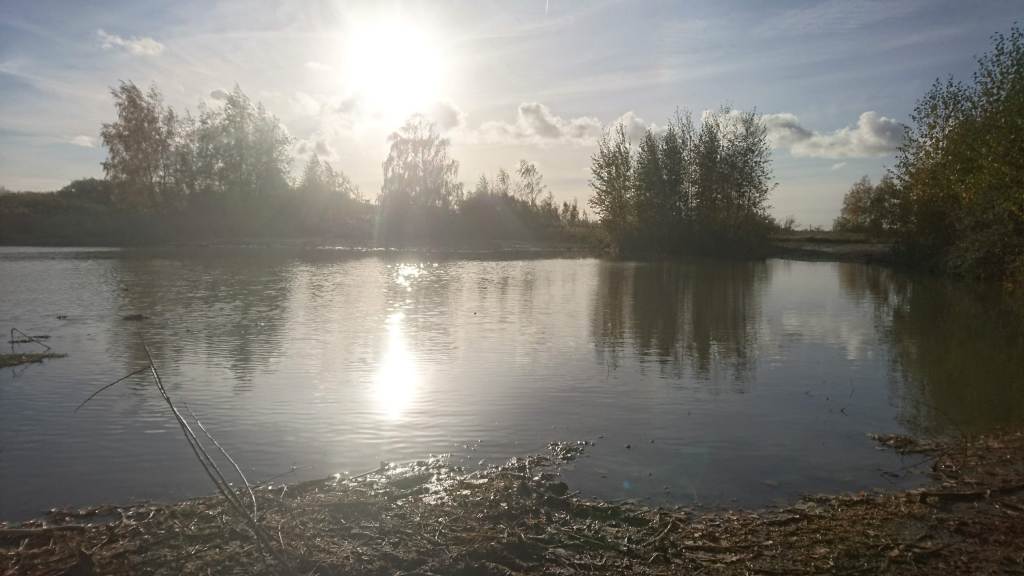
Photo by Chase Baker on Unsplash.

For your reading pleasure, there’s an article I put together on climate fiction.

There’s a couple of lists there too with books you might enjoy if you like giving yourself anxiety.

Joking. Not. Thing is, good sci-fi (under which climate fiction falls) has never been about the future nor about the sci.

It’s always been a criticism of what’s going on right now. When it’s really good, it’s about what’s always been going on. The article goes into that. Why on Mother Earth would anyone bother reading about destruction, especially since it’s already happening in the real world?

I view climate change very much as a tragedy. Knowing what will happen if we continue with our course of action but being incapable of changing who we are.It’s interesting considering where climate fiction fits into the general canon of post-apocalypse and all the books I grew up obsessing about.

So, check out the article and the lists and let me know if any of these books strike an anxious chord with you.

https://www.inspired-quill.com/blog/guides-resources/should-climate-fiction-be-scary/

https://www.inspired-quill.com/blog/guides-resources/5-near-future-climate-fiction-must-reads/

https://www.inspired-quill.com/blog/guides-resources/5-climate-fiction-must-reads/

Halfway through writing a new novel and I figured this would be a good time to post about it.

I’ve been working on a speculative fiction story with strong sci-fi elements for about a year now. As with everything I write, this is close to my heart. Yes, there is cli-fi elements in there, because this is what keeps me up at night, but there’s so much more.

There is a certain frustration that comes from reading and writing straight-forward narratives and I’ve always had a thing for experimenting with form. Recently, I reached out to a couple of professors of English to have a discussion on representing time on page and how to manipulate it.

Exciting times.

I will be posting bits and pieces of the novel here as tasters. If this wasn’t obvious, I’m really excited to play with form and structure and I hope you join me for the ride.

Contrary to how things may appear, I am not dead.

What I am is very tired after getting my ass kicked by 2022. Some major life changes that sapped my energy and mood, but also a lot of great things happening.

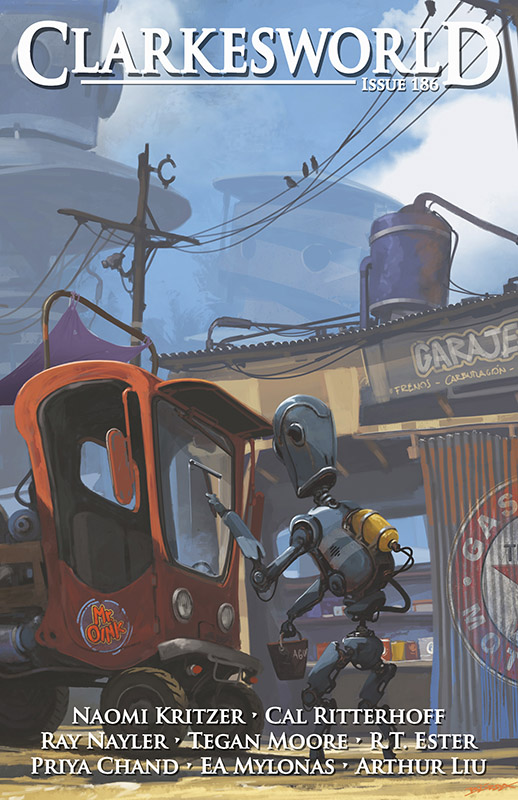
My short story, Saturn Devouring His Son, got published on Clarkesworld Issue 186 and you can read it for free here (I love the audio version by the way). Everyone who loves scifi loves Clarkesworld and everything Neil Clarke has done for the genre. There’s prosthetics in there, there’s small town mindsets, and giving your allegiance to a company that will sometimes literally eat you alive to make a profit. I’m increasingly losing my patience with corporatism and how it impacts human lives (including mine and yours) and I think it shows here.

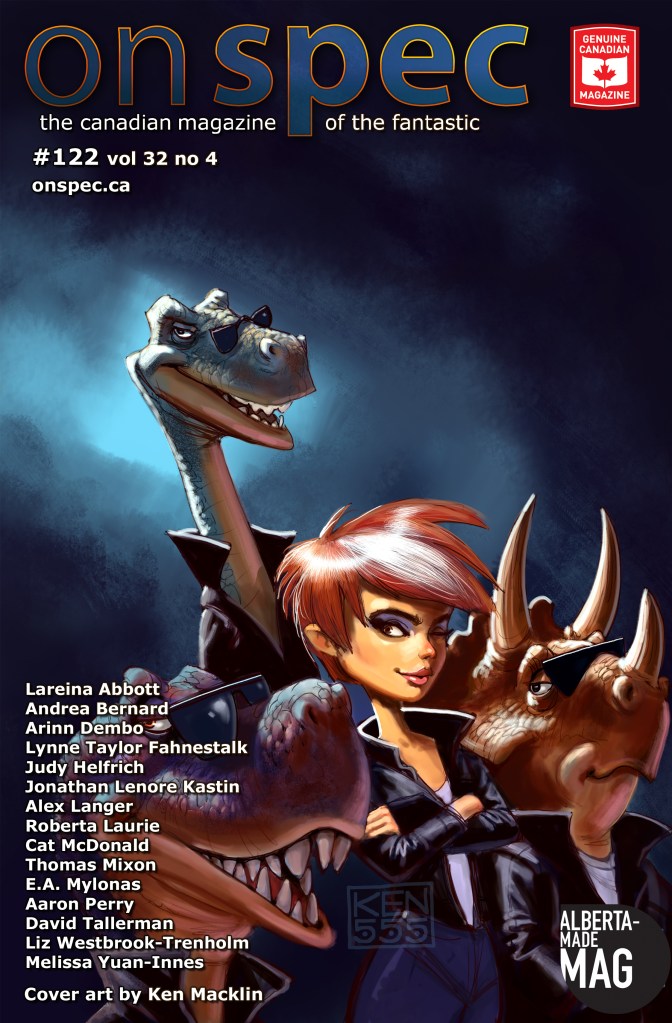
Acceptance was published on OnSpec Magazine Issue 122. I wanted to play with time and the perspective of a person who experiences all of her life simultaneously. Most of all though I wanted to get inside the head of someone who knows something bad is coming, yet is unable to do anything about it. This is a very real feeling I struggle with when looking at climate change trends and the fossil fuel industry posting record profits year after year after year. Generally speaking, we’re fucked, and losing is not something I’m comfortable with. Where do you draw the line and stop fighting? You can buy the issue here.

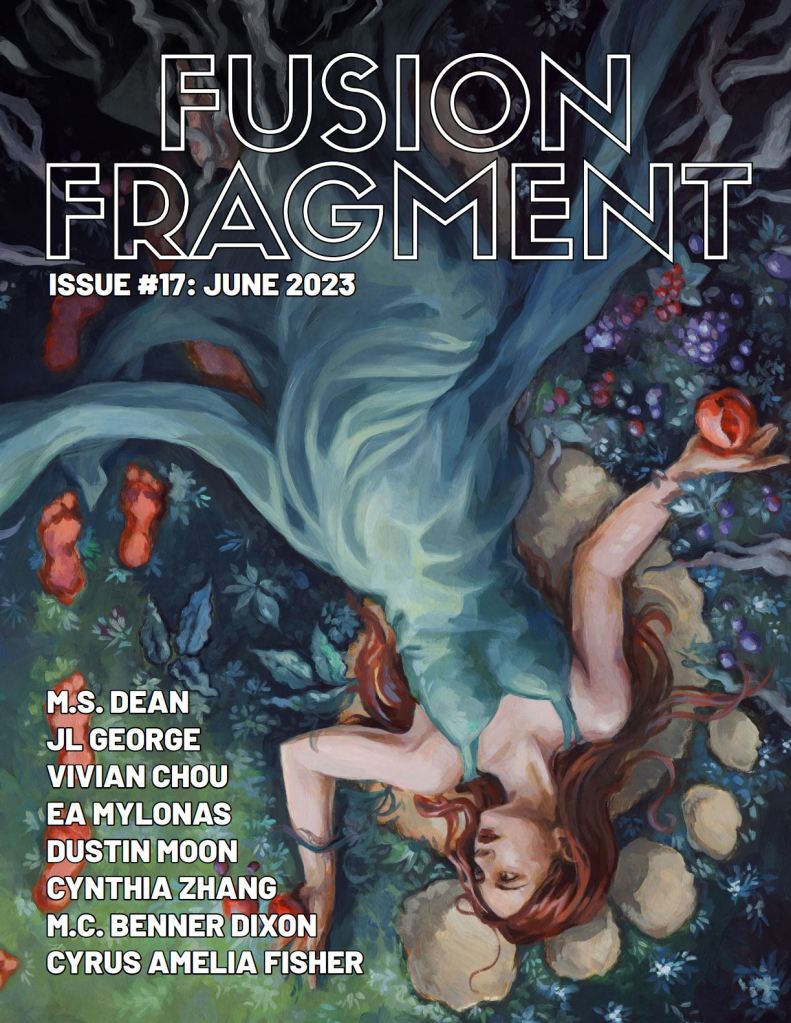
Spirals is about to be published on Fusion Fragment Issue 17 in June (next month). I love working with Fusion Fragment and Cavan Terrill’s crew, there’s something very exciting about the stories they collect, something very fresh and hungry. Spirals looks into the life of a newly-wed immigrant couple. A lot of things change for them, not least of which the stress causing one of them to turn into a chrysalis and begin a transformation.

There’s work started on a new book that I am very excited about. I get to play with form here to a far greater extent than I did back in The Hush. Hopefully there will be a first draft to discuss with the great folks over at Inspired Quill at around the end of the year.

Last but not least, I am taking part in WriteHive 2023 as a panelist for discussions on experimentation in scifi and criticism. What I’m really excited about though is the panel on AI in publishing. This was a discussion that was both passionate and intellectual (and at times a bit heated). Recording the discussion after 26 hours of no sleep felt surreal but it was truly a pleasure discussing with the super prolific L. Marie Wood, York Campbell of the Welcome to Earth podcast who uses AI in ways that complement creativity (but that don’t act like a crutch), Andy Dibble who probably made the quote of the panel and who taught me quite a few things, and Tim Baughman, an absolutely awesome human being, insightful writer, and masterful moderator. The panels will be published in the second week of June and there will a live discussion that I will take part in.

A few last words. Shit happens and it kills your will to do anything other than exist. I’m lucky to have a very understanding and supportive partner, but treating yourself with kindness is an acquired skill and not one that most people have had a lot of practice with. Treat others as you’d treat yourself. Treat yourself as you’d treat others.

Talk to you soon.

So. The Hush is coming out today.

Later in the evening, I will meet up with my good friends, the amazing poet/writer/actress Sara Rahmeh, the stalwart film director Marianne Hansen, and the writer and businesswoman extraordinaire Marilag Dimatulac for celebratory drinks.

There’s little of me that’s in the mood of celebrating.

I decided to write this book on day 2 of a 3-day silent period. That was the result of an argument I had with my now ex-wife. If you were to ask me what the argument was about, I wouldn’t be able to tell you. I only remember us glaring at each other from opposite ends of the bed, not saying a word.

The silence that followed was comfortable. We gave each other space. Or maybe we just didn’t feel like talking to each other. Maybe both. And so I wondered what a world would look like where couples weren’t allowed to talk at all and having the burden of (mis)communication taken from them. What misunderstandings we’d avoid!

As time went on, our communication broke down completely. Needs were not met. Hurt was dismissed. Talking things out led to becoming defensive. And I had enough. So, I stopped communicating. I stopped bringing up things that hurt me and I stewed on them, until it all came out in one bitter wave a few days before I asked for a divorce.

I don’t feel like celebrating. This book is too personal, but then again, every piece of honest fiction is condemned to be too personal.

Ah, well…Live, learn. Or don’t learn and keep repeating the same mistakes.

This book remains a dystopian speculative fiction novel with clifi elements. So, despite the story behind it, it’s still fun to read (as fun as reading dystopian speculative fiction with clifi elements can be). I sincerely hope you enjoy it and, if you take anything from it that may enhance your worldview, please drop me a message.

I’d love to talk with you about it.

I was recently invited to participate in a number of panels for WriteHive 2022, an online conference for writers. It has been a great honor chatting with authors like Chelsea Lockhart (also the CEO of Written in Melanin), fellow biologist and clifi writer Patricia Tavormina, and memoirist Yujin Kim. Always interesting to pick the brains of such a diverse group of people who all love writing.

If you have the time and are curious, do check them out (links at the bottom).

The panel that I enjoyed the most, however, was a one-on-one with the charismatic and eloquent Jerusha René, fellow writer and CEO of WriteHive. We talked climate fiction.

I’m writing these lines just a few days after my city, Copenhagen, broke a nearly 50-year old heat record. It hasn’t been the only city that has broken heat records this summer. Parts of Italy went on a state of emergency and London is shutting down. Greece experienced a 750% increase in forest fires since the previous year.

The thing about fiction is that you can write about anything and, if you coat it in a good story, it will stay with people. I used to think it was climate change deniers that were holding us back and it was them I was hoping clifi could reach to.

I no longer believe that.

It’s inertia that will do us in. Governments promising to cut fossil fuel emissions while awarding increasing incentives to dig for oil. Corporations being lazy because they can’t see beyond the next quarter’s results. I mean, look at this.

Climate fiction will become more and more important as we witness a true apocalyptic scenario unfolding before our eyes. It is my hope that this will spur people into action. Make them demand change from their governments and boycott those industries that continue leading us to a disaster we cannot recover from.

Please, if you value your existence, take action. Recycling and taking public transportation will not cut it anymore. We need big scale drastic action now.

Write to your politicians. Demand action. Form grass-roots organizations and campaign. Do Not. Give. Your Money. To Polluters.

Links to the other panels;

Scientists in Science Fiction

Indie Authors: Is it right for me?

Indie Publishing when English is Your Second Language

Given the COP26 action plan, this is hilarious. It’s also depressing, because it shows how absurd the whole climate change action plan really is. Taking baby steps when we should be single-minded in preventing this planet becoming hostile to human life.

It’s not that I don’t appreciate the billions that may be released for green initiatives every year. It’s that I don’t see anything that makes me think we are treating climate change like the life-or-death emergency it is.

Imagine you’re in a spaceship floating through space. A spaceship whose life support systems make it self-sustainable by offering its passengers all the oxygen, all the food and clean water, and the energy they need to thrive. Not survive, but thrive. An environment that, if not pushed beyond its limits, can sustain itself forever. Just as well, because this is the only spaceship you have.

Lose it, and you’re done.

But there’s an idiot tampering with the life support systems. Because it’s “profitable”. Because the idiot says, it will give everyone snazzy new devices to waste time on and make spending money easier.

And he’s not alone. There are other idiots who drive the systems harder, because it increases margins. Because it drives production efficiency. Because it allows 24-hour shipping, and bigger SUV’s, and 245 channels all beamed into your living room for your viewing pleasure. Never mind that the sweatshops where consumer products are produced have nets to catch suicidal workers. Never mind that the process poisons your water and gives you cancer and takes away your children’s right to live on this spaceship. Elsewhere in the spaceship, people are already dying.

What do you do to those idiots?

Stick them in an airlock and blast them out to space?

But we don’t. Why are we talking about plans that might have an impact by 2050, while our actions point to a different direction? Why are we talking about phasing out coal, but not doing a thing about the fossil fuel industry subsidies? Why are we not killing the companies that are responsible for climate change?

Oh, you think I’m missing the financial complexities of saving the environment? We carried out total war on a planetary scale twice in the 20th century. We split the atom. We put a man on the moon. I’m sure we can figure this out.

This is where we’re heading. This is what’s already happening. Climate refugees. Extreme weather. Agricultural failure. Now. Not in some science fiction movie.

So, please, take the idiots messing with the life support systems seriously. Stop buying from the Nestle’s of the world. Choose renewable energy. Vote for the people whose concern is the survival of the species rather than maximizing profits for the Bezos’ of the world. Then, hold them accountable.

As a person I greatly admire always says, “actions matter more than words”. Do you have full control over climate change? Of course not. Because, in the end of the day, it is a complex issue. Does that excuse you from not doing everything you can to stop the idiots messing with the life support systems?

You tell me.

It finally happened. Nature was declared legally wrong.

Just around the corner from where I live, on the edge of Copenhagen where the city ends and a protected nature area begins, there used to be a pond. This was the result of digging a large pit intended to take some of the burden away from the sewage system. Rainwater flowed in there from storm drains.

It made sense at the time. The entire neighborhood is at risk of flooding (something which I found out in dramatic fashion about a year ago). The protected nature area is also home to a number of newts, water salamanders, dragonflies, frogs, herons, and migratory species that use its bogs. Once the pit filled up with water, it also filled up with life.

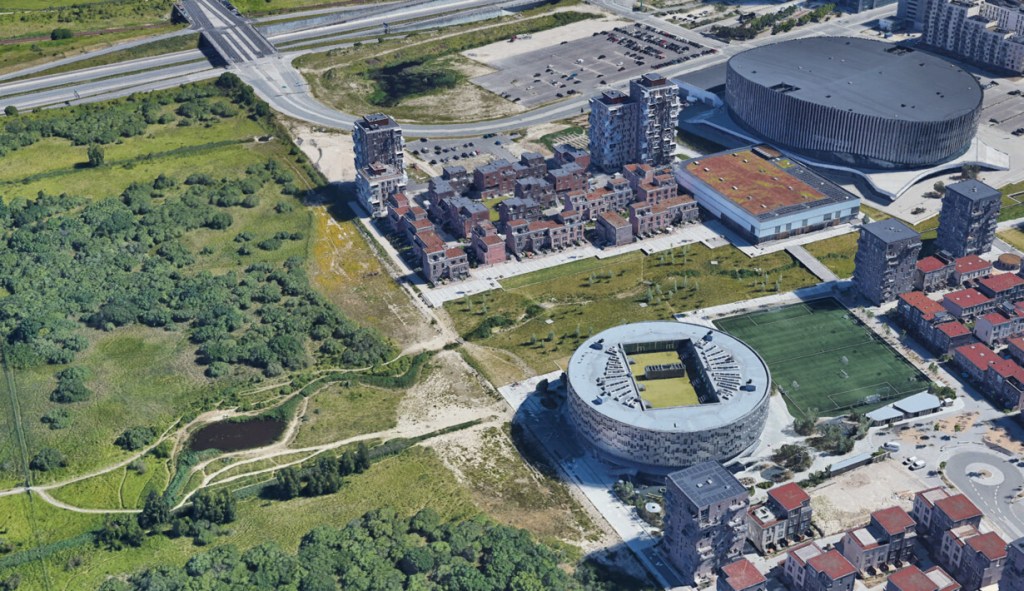
Aerial shot of Kalvebod Faelled.
The pond at the bottom left of this Google Earth picture. The round building towards the bottom right is the local school.

The local school saw this as a gift. Ecology classes would take place at the pond. Kids roamed and explored. The fifth graders even built a surprisingly sturdy bridge with 2×4’s over a crossing.

And then, the Nature Conservation Society raised a complaint to the authorities. Claiming the pond was “the wrong kind of nature” for the area. And the city agreed.

Now, I need to point out that there are very good reasons why tampering with an ecosystem without doing your research is a bad bad idea. But we’re not talking about introducing rabbits to Australia here. There’s several such ponds throughout the area. But “our” pond was declared illegal on the grounds that the muddy grassland it occupied was protected territory (it is not. The border lies a couple of hundred yards away). This was a niche in an ecosystem that had supported it just fine for years.

Still, the excavators came. They killed off all life there over 24 hours and turned both the pond AND the edge of the protected area into a muddy wasteland of tracks, broken plants, and frog corpses.

And then, came the rain.

Cold. Relentless. The kind of rain that feels like the end of the world, that makes you wonder whether the gods are fed up once more with our kind.

Day after day after day.

Water flowed into the destruction. Swallowed it up. A small pool formed where the pond used to be. It got bigger over the days and nights. Wider. By the time the rain let up after four days, a pond three times the size of the old one glistened and rippled.

On that fourth night, as I was riding past on my bicycle, eyes squinting against the wind and with the clouds finally breaking, my headlamp caught a heron standing in the middle of the pond. A sliver of white against ink black. It didn’t pay attention to me. Only looked into the dark distance, as if contemplating this act of resurrection.

In my mind, it smirked. And I smirked with it.

Kalvebod Faelld pond
The pond as of Oct 23rd 2021.The sun is out after four days of rain.

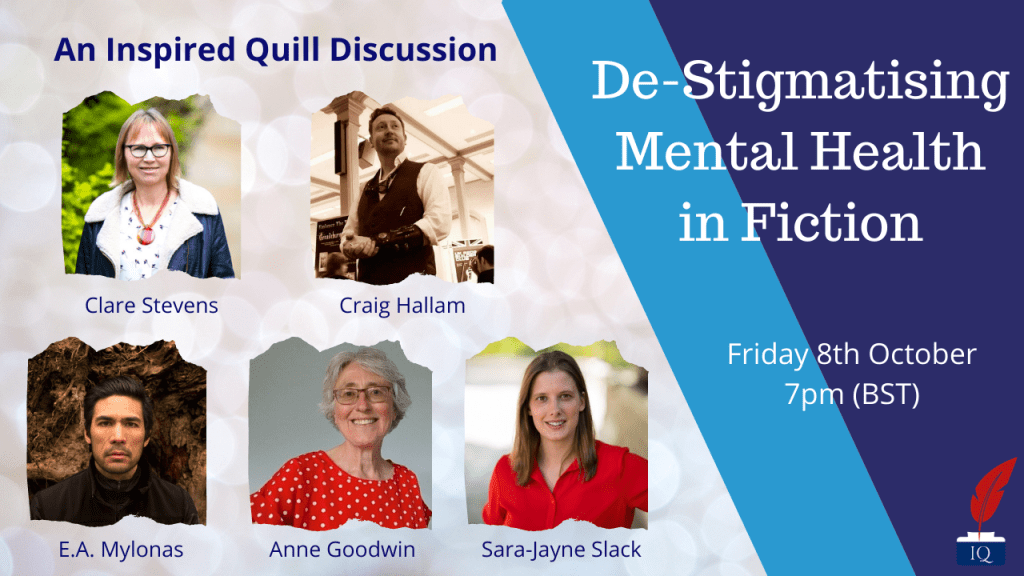
Hey everyone. On October 8th at 7pm BST/2PM EDT I’ll be joining writers Anne Goodwin (Sugar and Snails), Craig Hallam (Oshibana Complex), Clare Stevens (Blue Tide Rising), and the indomitable managing director/editor Sara-Jayne from Inspired Quill for an online chat.

We’ll talk mental health (and illness) in fiction; the books that got it right, the ones that didn’t, and the stigma mental illness carries.

I’ve always been a believer in the mantra that stories are how we make sense of ourselves and the world around us. And, while I’ve been a fan Fight Club and The Silence of the Lambs, they are probably not the most accurate examples of mental illness ever put on paper. And that’s fine. Fiction books are not meant to replace a nuanced understanding of real world issues. On the other hand, how many people refer to psycho killers these days, or have a skewed idea of bipolarism because they read about it in a book or watched a movie?

So, join the discussion by clicking on this link->https://youtu.be/MWIgQZ2FPjY

Share your questions, bring up your favorite books dealing with mental illness, and let’s have a cool evening.

Something awesome happened recently.

I live next to a spot in the outskirts of Copenhagen called the Amager Commons, a 223-ha national park that is home to a number of animal and plant species. There’s falcons, hawks, owls, grebes, foxes, deer, tormentil, marsh orchids, and a bunch of others, some of which are protected by law. Amongst them is the humble Northern Crested Newt, which is about the size of my palm.

There’s much to love here. Copenhagen isn’t a large city, but it can tire you out. There are hiking and bicycle trails through the forest and a lot of my Instagram pictures are shot while walking through it and clearing my mind. It’s a place we need in a country that doesn’t have the awe-inspiring vistas of Norway or New Zealand, or the old-growth forests of the US and Canada.

Part of the Commons was rezoned at one point with the intention to knock down the vegetation and natural habitat and replace it with residential buildings. Since then, various nature protection organizations have been trying to stall development and, I’m suspecting, part of the reason why it took years for construction to begin at all was the public outcry and how this one case has always been brought up during communal elections.

Last year, the project started.

The nature protection organizations keeping an eye on the development argued that it went against nature protection laws. A court ordered the development company to cease until it could be determined whether construction was impacting protected species, which the company ignored and pressed on. I’ve had dealings with that company before and I can tell you they are a bunch of criminals that have outright lied in court in various cases and cheated to squeeze as much money as possible out of locals. Nothing ever happens to them because it’s a joint public-private venture that affords the company a certain amount of immunity.

Enter the newt.

The Friends of Amager club managed to get a court to put a stop to the construction by providing evidence that the endangered Northern Crested Newt’s habitat would be wiped out. Only catch was that the club had to pay a guarantee of 2 million Danish Kroner (roughly 320k USD) in lost earnings in case the developer appealed and won the case, and the club had to do so within 7 days.

We managed to get the money in 36 hours through Facebook-driven donations alone. The machines went packing.

Now, there’s a couple of things to note here. One is how capitalists can’t be trusted. The development company has been vocal in their intention to fight the decision “because how can a damn newt stop a multi-million project?” Companies don’t care about you, they don’t care about your well-being, and if they had it their way free-market style they’d turn the world into a huge slum if it meant more money in their pockets. Keep in mind, the guarantee that was asked for in court was 12 times higher and was based on false statements, which thankfully the judge laughed off.

The other is, piss off enough people and I don’t care how big you are. We’ll end you. It doesn’t take more than a newt to stop lying companies, after all.

I’ll put some articles below on how companies have been lying and cheating their way to contribute to the climate emergency throughout time. I want to make a point that any positive environmental action will always be facing one main opposing force; people sitting in a board room trying to take more resources out of the world than they are giving back to it. And they won’t care if it means your stress levels will go up because you only see trees on TV or that newts will be wiped out of existence or that the seas are emptying or that we’re all getting more cancer or that large parts of the world will become uninhabitable in a few years’ time. The only language they speak is stock prices and bonuses.

Also, just in case some smart-ass asks me if I have an alternative to capitalism that doesn’t involve murderous communism, I do. It’s called social entrepreneurship and my publisher, Inspired Quill, is a company functioning in this manner. Making money and not selling your soul to Satan are not mutually exclusive.

Being in nature is good for your health.

Walmart does nothing towards its zero net deforestation policy.

IKEA happy to use illegal timber, as long as someone else does the felling.

Timber barons straight up murdering activists protecting the Amazon forest.

Tesla, Facebook and others hiding their true environmental impact.

Koch Industries funding climate change denial.